The Masters Programme
Welcome to the SSEES Masters programme webpages! We have a thriving community of graduate students at SSEES. The MA programme is the broadest and deepest of its kind in any European university, and reflects the expertise of SSEES's staff.
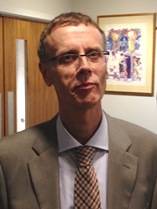
Dr Zoran Milutinović, SSEES Graduate Tutor (Taught Students)
These are just some of the reasons to do an MA at SSEES:
ten degrees taught by leading scholars specialise by discipline and area research training for area studies intensive language training the SSEES Library, the largest of its kind in the UK five minutes walk from the British Library academic and social events in the centre of London part of UCL, of one of the world's leading universities.
Contact us to find out more!
Programmes of study:

The School offers ten MA/MRes degrees, 8 of 12 months (full-time), 2 of 24 months (full-time) starting in late September. In each one-year degree, students take courses to the value of 120 credits and complete a dissertation of 10,000 -12,000 words, worth 60 credits. A one-term course is worth 20 credits; a two-term course is worth 40 credits.
Assessment is by a combination of course work and written examination, the written examinations taking place in May and the dissertation being submitted the following September. Part-time students attend the same classes as full-time students and normally undertake courses worth 80 credits in the first year and (provided these are passed successfully) courses worth 40 credits plus the dissertation in the second year. The two-year degrees are presented in more detail on their respective webpages.
Some of the degrees require students to take compulsory core courses, but a feature of all them is the amount of choice available. Please note that due to the large number of courses offered your chosen courses may clash. Exceptionally, and subject to the approval of the programme tutors, a course may be selected from the Masters programmes of other departments within UCL, and other colleges within the University of London, provided that it contributes to the overall coherence of the degree and that the other department or college agrees.
The dissertation is an independently researched piece of work. The topic will normally be within the subject area of the degree chosen by the student, and students receive tutorial help with the choice of topic and its scope.
The Danube at Dürnstein: medieval ruins, baroque architecture, modern viticulture
Two Year Programmes
One Year Programmes
Finance and Funding
In addition to a range of UCL scholarships, which include Masters awards through the ESRC Doctoral Training Centre (DTC) and the AHRC Block Grant Partnership (BGP), SSEES anticipates that it will be able to offer up to three scholarships to the value of tuition fees at Home/EU level. A number of scholarships are also being offered for participation in the two-year 'International Masters in Economy, State and Society'. For further details about next year's Fees and about funding opportunities please follow the links provided below:
- Graduate Fee Schedule
- AHRC BGP awards
(for students working in the Arts and Humanities). For 2012 entry, SSEES is able to accept applications under History. Applicants must submit their UCL admissions application by 1 March, on which they should indicate they wish to be considered for an award under this scheme.
- ESRC DTC awards
(for students working in Economics and the Social Sciences)
SSEES anticipates that it will offer two studentships at the following levels: MRes + MPhil/PhD (2+3 years or 1+3 years); MPhil/PhD (3 years); The final decisions will depend upon the quality of the applications. All studentships will begin by 1 October 2012.
Deadline for submission of the UCL admissions application and statement of intent to apply for the specific ESRC award at SSEES: 1 February
- Scholarships for International Masters in Economy, State and Society
- Scholarships for UK and EU Masters Students
- Scholarships for Overseas Master's Students
- SSEES Studentships (fees only): For the next session's entry, SSEES anticipates that it will be able to offer up to three awards to the value of tuition fees at Home/EU level. Applicants must submit their UCL admissions application by 1 March, on which they should indicate they wish to be considered for an award under this scheme.
- MRes in East European Studies: Overseas Fieldwork Grants
The Commonwealth Shared Scholarship Scheme
The Commonwealth Shared Scholarship Scheme is a joint initiative between the Commonwealth Scholarship Commission (with funding from the Department for International Development (DFID), and UK universities, to support scholarships for students from developing Commonwealth countries who would not otherwise be able to study in the United Kingdom.
The aim of the scheme is to assist students from developing Commonwealth countries who are of excellent academic calibre but for financial reasons would not otherwise be able to afford to study in the United Kingdom. The scheme allows them to benefit from postgraduate study at a university in the United Kingdom which will help them to contribute toward the development of their home countries.
Only applicants for MA Comparative Business Economics, MA Politics, Security and Integration and MA Institutions, Development and Globalisation are eligible.
The deadline for applications is to be confirmed.
SSEES MRes Scholarships
The UCL School of Slavonic and East European Studies is offering two ESRC scholarships that may be given at the level of either MRes + MPhil/PhD (1+3 or 2+3 years) or MPhil/PhD only (3 years) with the final decision depending on the quality of the applications. The scholarships provide Home-EU fees plus maintenance (for UK residents) with studies to start from 1 October 2012. SSEES aims to build upon the research and training programme of the Centre for East European Language-Based Area Studies (CEELBAS), and applicants are encouraged to show engagement with the CEELBAS research themes for 2010-16.
Further information
The deadline for applications is 1 February 2012.
Open Evenings
Meet the Programme Tutor of the degree in which you are interested in an informal setting by coming along to one of our evening Seminars. The usual format for these seminars is speaker's talk, questions and answers, glass of wine and chat. To arrange a visit, please contact maadmissions@ssees.ucl.ac.uk.
Each 'new' language course is designed for people who do not already speak or understand that or a closely related language. It requires intensive study, and applicants must provide evidence of language learning ability. Early progress is monitored carefully, and in some cases students may be advised to transfer to a different course. The language must not be a prerequisite for another course taken in the same year; students wishing to study courses which do have a language prerequisite may study the language during the first year of a part-time degree.
The languages currently offered are:
Not all these languages may be available in any one year. However, we will always ask you for a second choice in case your first is unavailable.
The rigorous exams we set for our language courses mean that potential employers or prospective PhD supervisors will know that SSEES MA graduates can work effectively with the languages they have studied.
The Intermediate Russian course is available to those whose knowledge of the language is between GCSE level at the lower end and A-level at the higher (overseas equivalent qualifications are admissible). Students wishing to take the course in Advanced Russian must already hold an upper-second class Honours degree-level qualification in the language. Entry to both courses is subject to passing an entrance test held during the first week of registration. Please note that the gap between Intermediate Russian and Advanced Russian is significant: the latter is taught at a much higher level.
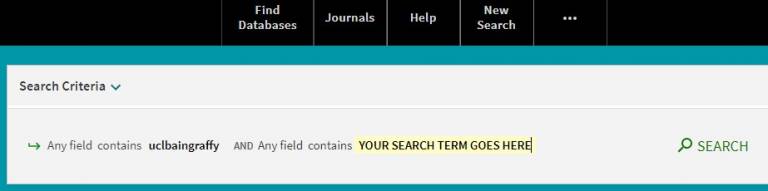
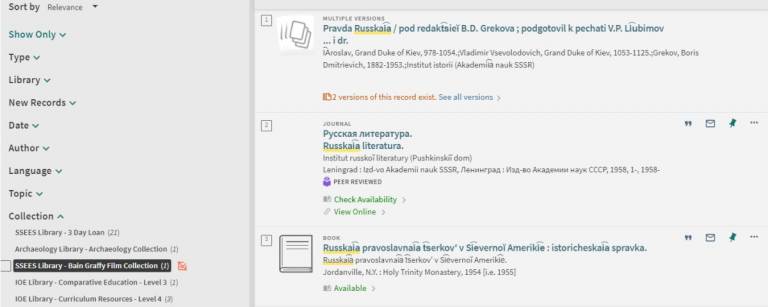
Students with some knowledge of Russian but who are not taking language courses may nevertheless make use of our other facilities such as Russian television broadcasts, books and periodicals in the Library, attendance at departmental seminars, lectures and poetry readings, the Post-Soviet Press Group, and screenings of Russian films.
Normally an Upper Second Honours degree or equivalent, although we shall consider applicants with high lower second-class honours degrees or equivalent on their merits. Overseas applicants must hold an equivalent qualification. Some degrees require students to have appropriate background knowledge of the subjects they wish to study; in some cases previous study to degree level is required, and some courses have a language prerequisite. Students whose native tongue is not English must be able to read all texts, participate fully in class discussions and be able to write essays, examinations and dissertations with a proficient use of the language.
Non-native English speakers require an overall score of 7.0 in the IELTS, with a minimum of 6.0 each of the subtests.
With their specialist knowledge and language skills, SSEES MA graduates can be found in business, finance,
the media, international agencies, charities, diplomacy, international security organisations, the law,
and academe. Recent employer destinations include Independent Television News, the Financial Times, the Foreign and
Commonwealth Office, the Organisation for Economic Co-operation and Development (OECD), NATO, Government Communication
Headquarters (GCHQ), Amnesty International, PricewaterhouseCoopers, Chase Manhattan, the Bank of England, and the EU.
Some advise the Russian, Polish, American, and other governments, and the European Commission.
SSEES MA students enjoy the benefits of the UCL Careers Service, and are encouraged to make
early use of it for career planning, and marketing their additional skills and education.
An employer evening reception at SSEES during the Spring enables finalists and graduate
students to make direct contacts with employers.
For further information please contact:
SSEES Admissions
Tel: 020 7679 8830
Fax: 020 7679 8722
email: maadmissions@ssees.ucl.ac.uk
The postal address for the School is:
The School of Slavonic and East European Studies
University College London
Gower Street
London
WC1E 6BT
The street address for visitors to the School is:
UCL School of Slavonic and East European Studies
16 Taviton Street
London
WC1H 0BW
Map of UCL and the surrounding area
Information for Prospective Students: Graduate Study at UCL
Between Poland and Slovakia: The Tatra Mountains
This page last modified
Thursday 2 February 2012.
|