Close
Close


The Bain Graffy Film Collection
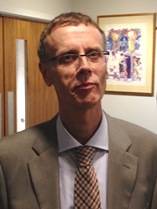
The collection was created and built up over many years by Professor Graffy and was named in his honour to mark his retirement from UCL SSEES in December 2013.
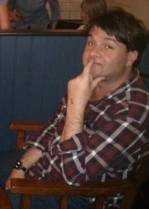
Over many years, until his sudden death in June 2014, Cameron Bain was responsible for adding material to the website indexes and for creating thousands of individual catalogue pages, a task he performed with knowledge, enthusiasm and exemplary efficiency. For this reason the collection was renamed in his memory.
To search the collection, choose the appropriate index below and follow the links to obtain full details about the item.
UCL staff and students may watch material in the Multimedia Room at UCL SSEES Library. Note down the call number of the DVD / video tape on which the material is held (e.g. DVD-123) and request it at the Library Help Desk.
Please note that viewing facilities are NOT available to people from outside UCL.
Search the collection
Search the film collection in Explore →
Indexes
Important: for recent additions to the collection, please check the 'Material in cataloguing' below.
- Feature Films
- Russian and Soviet Feature Films, Television Films and Television Serials, Listed Chronologically
- Russian and Soviet Feature Films, Television Films and Television Serials, Listed by Director
- Central Asian Feature Films
- Central and East European Feature Films
- Literary adaptations from Russian, Central European and East European sources
- Feature Films from other countries on Russian, Central European and East European Subjects and films made in other countries by Directors originally from Russia, Central Europe and Eastern Europe
- Animation
- Documentaries on History, Politics and Current Events
- Documentaries on Literature, Cinema and other Arts
- Documentary Materials and Feature Films about the Lives of Russian, Central European and East European Writers
- Documentary Materials about Russian, Central European and East European Cinema
- Materials relating to Russian, Central European and East European Art, Architecture, Ballet, Classical and Popular Music, Opera, Photography, Rock Music, Television and Theatre
- Language Learning Materials
- Other Materials
Material in cataloguing
The items listed here are all in the process of cataloguing. Though the discs listed here are not yet in the full catalogue or the indexes, they are on the shelves and are available for use. Just ask for them at the Library help desk in the usual way by giving the Call number.
- Material in cataloguing (Complete list as of 19 February 2024)
Help with searching
Option 1: Use Explore advanced search
Our pre-populated advanced search in Explore will show all records in the collection. Users can add your own additional search term to search within the collection.
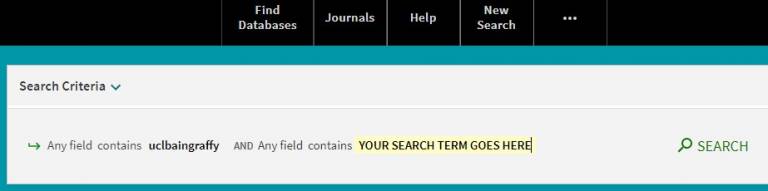
Option 2: Explore catalogue search, then filter results
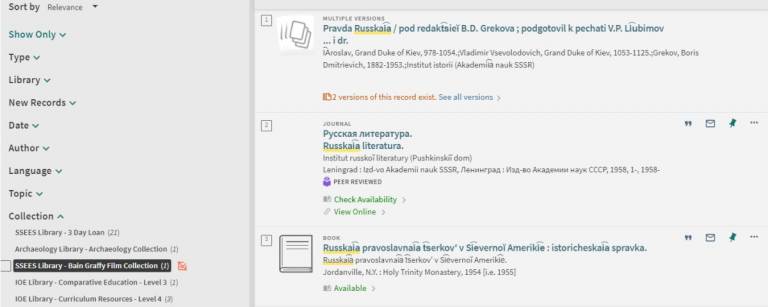
Users can perform a library catalogue search in Explore and then select "SSEES Library – Bain Graffy Film Collection" found under the "Collection" heading of the filter options.